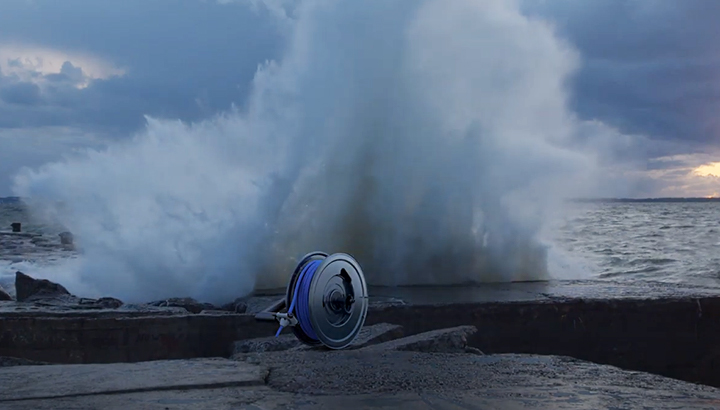
Industrial hoses and cables are subjected to constant mechanical and environmental stress. High and low temperatures, wind and water, dust, chemical substances and UV light all take their toll over time.
Whether it's a chemical plant or an oil platform, a vehicle garage or data centre, it's essential that hose and cable reels can withstand the specific conditions of the facility they're installed in, and many environments are more demanding on equipment than they first appear.
But durability isn't only about surviving the environment. Left ungoverned, trailing hoses and cables create trip hazards, get run over and damaged, and slow operators down as they untangle or search for equipment mid-task. A reel that's genuinely built to last has to solve both problems at once: withstand the conditions and keep the workplace safe and productive while doing it.
Nederman industrial reels and media supply systems come with a 10-year warranty, reflecting a service life that in practice runs to ten or fifteen years or more.
User convenience and durability go hand in hand
Hoses and cables that are pulled and dragged frequently need to be built for how operators actually use them, not just how they perform on a spec sheet. The heavier a reel, the more inertia it has, and that inertia needs to suit the environment. Operators working on wet floors, for example, benefit from lighter hoses and cables that don't demand the same physical effort as heavier ones. Hoses and cables also need to be easy to grip; many are exposed to liquids or greasy substances, so they shouldn't be too smooth or slippery, and should wipe clean easily.
Retractable reels make workplaces safer, and equipment last longer
A lot of wear and tear is prevented simply by using a reel and keeping hoses and cables retracted when not in use. One of the most common reasons hoses and cables need replacing is repeated running-over by vehicles or equipment. Entirely avoidable when they're stored on a reel rather than left on the floor.
The productivity impact runs alongside the safety one. Time lost untangling cables, searching for a usable hose, or working around clutter on the floor adds up across a busy shift. Keeping equipment retracted and exactly where operators need it removes that friction, reducing downtime and supporting a smoother, more consistent workflow while also reducing the risk of accidents and material damage.
Mounting your reels correctly extends their service life
When installing and using retractable hose reels and cable reels, following the manufacturer's instructions matters more than it might seem. Mounting a reel upside down, or at an unintentional slant, negatively affects both its service life and the operator's ability to use it properly.
While most industrial reels are wall-mounted, ceiling mounting is often worth considering, pulling hoses and cables straight down from above is frequently the easiest way to access them without interfering with other operations.
For reels to retract properly, well-adjusted springs are essential, and ball bearings to minimise friction are strongly recommended. At Nederman, this is a minimum standard across all industrial hose reels and cable reels, not an optional upgrade.
In terms of maintenance, a genuinely durable reel shouldn't need more than an annual visual inspection. If a reel needs monthly or even weekly attention, however minor, it's a sign it should be replaced with something more robust. Getting this right prevents unnecessary maintenance, downtime, and reduces total cost of ownership over the reel's lifetime.
Built for how reels are actually used
Cable reels see a wide range of demands beyond simple retraction. Nederman's range includes single and three-phase application options and is built to perform reliably whether the cable is used fully uncoiled or drawn out only partway, a detail that matters in practice, since reels are rarely used to their full length on every occasion.
Choosing high quality, durable reels pays off quickly
Quality differences between manufacturers can be significant. A high-quality reel can last more than a decade; a low quality one may need replacing within six months. The hoses and cables themselves need to be sturdy without becoming unbendable, and substantial without being floppy or light. Using high-quality steel, aluminium and composite materials across the reel, swivel and other components is what actually achieves long-term durability; cutting corners on any one component undermines the whole system.
How Nederman engineers for durability
Nederman's industrial hose reels and cable reels are produced in the same building as the company's headquarters in Helsingborg, Sweden, where every reel is assembled and tested before shipping. All components follow Nederman's own design standard, and the thorough testing carried out at the production facility keeps recalls and modifications to a minimum.
Nederman's reels are built to withstand temperatures between -20°C and 60°C and typically continue to perform reliably even outside that range. Backed by a 10-year warranty and a real-world service life of ten to fifteen years or more, they're engineered to perform with excellence across demanding conditions, not just survive them.
Frequently asked questions
Do hose and cable reels actually reduce workplace accidents?
Yes. Trailing hoses and cables are a well-documented trip hazard, and one of the most common causes of hose and cable damage is being repeatedly run over when left on the floor. Keeping equipment retracted on a reel removes both risks by default, rather than relying on operators to manage it manually each time.
How much maintenance do industrial reels actually need?
A genuinely durable reel should need no more than an annual visual inspection. If a reel demands monthly or weekly attention, that's a sign of a lower-quality unit that will cost more in downtime and maintenance over its lifetime than a more robust alternative would.
Are reels worth it for smaller sites, or only high-throughput operations?
Any site with hoses or cables in regular use benefits. A trip hazard or a damaged hose has the same consequence whether it happens once a week or fifty times a day. Larger, busier sites simply see the productivity and cost benefit compound faster.
You can find out more about our industrial hose reels and cable reels here. For more articles on our work with durable and convenient industrial applications, please visit our Nederman Knowledge Centre.