Woodworking: Managing sawdust and combustible dust risk
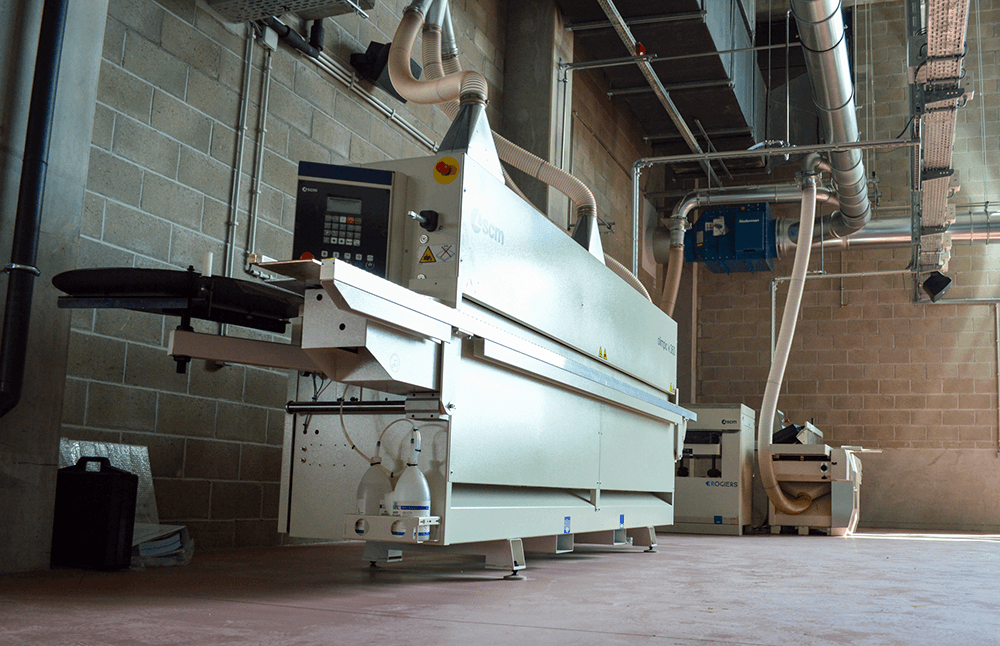
Sawdust is an inevitable by-product of woodworking, but left unmanaged, it can quickly become something far more serious. In busy production environments, dust is generated in high volumes and often as fine particles that spread easily through the workspace. What might seem like a routine part of the process can create significant risks if it isn’t properly controlled.
The impact is felt in several ways. Airborne wood dust poses a direct threat to worker health, with prolonged exposure linked to serious respiratory conditions. It is classified as a Group 1 Carcinogen, which is why organisations like the HSE enforce strict Workplace Exposure Limits (WEL).
- The WEL for hardwood dust is 3mg/m3 (based on 8-hour time-weighted average)
- The WEL for softwood dust is 5mg/m3 (based on an 8-hour time-weighted average)
To adequately control wood dust, exposure needs to be below the relevant WEL, with exposure reduced to as low as reasonably practicable. You can find the eight principles of good control practice in Schedule 2A of COSHH.
At the same time, settled dust can accumulate on machinery, accelerating wear and tear, increasing maintenance demands, and affecting overall production quality.
Alongside these challenges sits one of the most serious risks in any woodworking environment: combustible dust. Fine wood particles, when suspended in the air and exposed to an ignition source, can ignite rapidly and lead to a deflagration or explosion. These events are not isolated incidents. The woodworking sector represents a significant proportion of combustible dust cases globally, often caused by preventable issues such as poor extraction, system inefficiencies, lack of maintenance or a gradual decline in performance over time.
One of the key difficulties is that a combustible dust risk is not always immediately visible. It builds gradually as systems become less effective, filters begin to clog and airflow is reduced. Without consistent monitoring and intervention, facilities can find themselves operating in increasingly hazardous conditions without realising it until a serious issue arises.
Compliance is more than a checkbox
Standards such as ATEX and DSEAR exist to reduce these risks, covering everything from duct design and filtration to explosion isolation and system maintenance.
But compliance isn’t just about meeting a standard on paper. It requires a fully integrated approach across the entire dust extraction system.
That means:
- Capturing dust at source and filtering effectively
- Maintaining consistent airflow and system performance
- Incorporating appropriate explosion protection measures
- Ensuring regular inspection and maintenance
When any one of these elements is missing, the system becomes vulnerable.
Taking control with end-to-end extraction
The most effective way to manage dust and combustible dust risk is through an integrated, end-to-end approach to dust extraction. Rather than treating dust control as a single off-the-shelf purchase, it requires a tailor-made system that works consistently across the entire process.
This starts with effective capture at source, supported by high-performance filtration that removes dust before it can spread or accumulate. From there, intelligent control systems add another layer of value by using real-time data to adjust airflow and maintain optimal performance. This not only ensures consistent dust extraction but can also significantly reduce energy consumption, helping facilities manage one of their largest operational costs more efficiently.
Where combustible dust is present protection measures are essential rather than optional. Explosion isolation solutions provide a critical safeguard, helping to prevent an incident in one part of the system from escalating across the wider facility. At the same time, efficient material handling plays an important role in keeping operations running smoothly, preventing blockages, and ensuring that collected waste is managed safely and effectively.
Efficiency and sustainability go hand in hand
Managing dust effectively doesn’t just improve safety, it also creates opportunities to run more efficient and sustainable operations. Modern extraction systems, particularly those enhanced with intelligent controls, can deliver substantial energy savings while maintaining high levels of performance.
There is also increasing value in how collected wood waste is handled. Instead of being treated purely as a by-product, it can be repurposed for biomass energy, mulch, or other applications. This reduces disposal costs while supporting a more circular approach to manufacturing, aligning operational improvements with broader sustainability goals.
If you’re reviewing your wood dust extraction setup or looking to reduce risk, Nederman’s specialists can help you assess your system and identify practical improvements.
Contact Nederman