Lessons in Combustible Dust Safety from the Searsmont Silo Incident
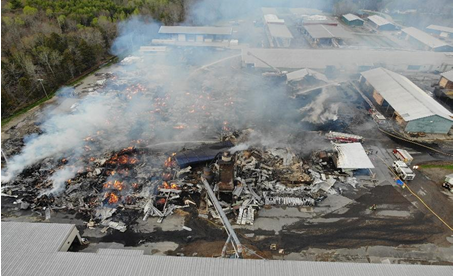
The May 2026 fire and explosion at the Robbins Lumber facility in Searsmont, Maine, was a devastating event for the community. People lost their lives, including two volunteer firefighters, and others were injured. The incident reinforces an important responsibility for wood products facilities: combustible dust hazards must be identified, understood and communicated before an emergency occurs.
According to the National Institute for Occupational Safety and Health (NIOSH), the event involved a fire near the base of an oxygen-limiting silo containing kiln-dried wood shavings and residual sawdust. The findings highlight the importance of understanding equipment-specific hazards, maintaining clear emergency procedures and coordinating with local responders.
Understand equipment-specific risks
Storage silos are not all designed or intended to operate in the same way. Their construction, contents and operating conditions can affect how a fire develops and how it should be managed.
The silo involved in the Searsmont incident was an oxygen-limiting design. This type of silo is designed to restrict the amount of air entering the vessel. That design can create fire and emergency response considerations that differ from those associated with conventional storage silos.
NIOSH reported that facility employees and responding firefighters were unaware that the silo was oxygen-limiting and that its contents presented a combustible dust hazard. The investigation also noted that the manufacturer’s emergency procedures warned against introducing water or foam into this type of silo. Those actions can force air into the vessel and contribute to an explosive mixture.
The broader lesson is that a response approach used successfully on one vessel may not be appropriate for another. Each silo, bin, dust collector and conveying system should be evaluated according to its design, contents and operating conditions.
Identify and communicate hazards
Hazard recognition is the foundation of combustible dust safety. Facilities need to understand the materials they handle, where dust can accumulate, how it can become airborne and where ignition sources may be present.
A Dust Hazard Analysis, or DHA, provides a structured way to identify and evaluate these risks. It can help facilities assess their processes, equipment and existing safeguards, then determine where additional protection or procedural changes may be needed.
For wood products facilities, a DHA should consider the specific dust or material being handled. It should also address the design and operation of silos, bins, dust collectors, ductwork and conveying systems.
The DHA should be reviewed and updated when equipment, materials or processes change. This helps ensure the facility’s safety practices remain aligned with actual operating conditions.
Clear documentation is equally important. Employees need to understand the hazards associated with the equipment they operate. Contractors and maintenance personnel need access to relevant safety information. Local fire departments also need clear, equipment-specific information before they arrive at an emergency.
Strengthen pre-incident planning
Pre-incident planning gives responders critical information before they need it. It can reduce uncertainty during a fast moving emergency and support safer decisions at the scene. A useful plan should identify the location and purpose of major equipment. It should explain what materials are stored or processed in each area. It should also identify known hazards, access points, utility shutoffs, available fire protection systems, emergency contacts and any response actions that should be avoided.
For combustible dust operations, plans should include equipment-specific guidance. This may include information about vessel design, stored material and appropriate response procedures. Clear hazard labels on equipment can reinforce this information during an emergency. NIOSH’s recommendations include improving pre-incident planning, training responders on different silo types and ensuring firefighters do not direct water or foam into oxygen-limiting silos.
Facilities should share these plans with local responders and review them together. A walkthrough or tabletop exercise can help both facility personnel and emergency teams understand the site before an incident occurs.
Apply engineering controls thoughtfully
Combustible dust protection is not a one-size-fits-all effort. Each facility needs safeguards that reflect its materials, equipment, process conditions and level of risk.
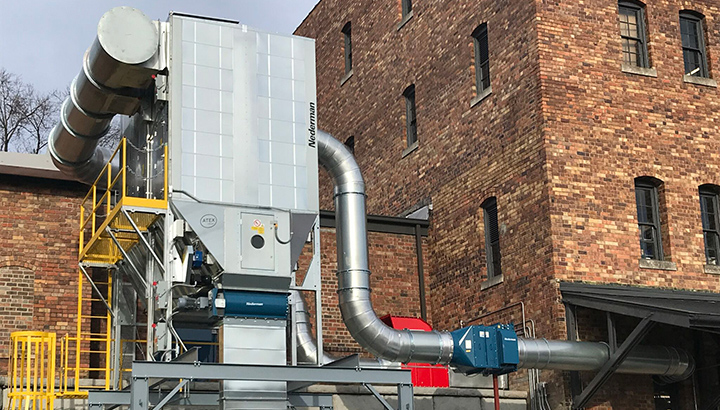
Depending on the application, a protection strategy may include dust collection, housekeeping, ignition source control, explosion venting, suppression or isolation. These measures are most effective when they are selected as part of a complete, engineered safety strategy.
Explosion venting can help manage pressure during a deflagration in certain applications. Isolation devices can help limit flame or pressure propagation through connected ductwork. Suppression systems may also be appropriate in some situations. The right combination of controls depends on the vessel, dust characteristics, process configuration and findings of the facility’s DHA.
NIOSH’s recommendations include strengthening pre-incident planning, training responders on different silo types and providing clear guidance on the hazards associated with oxygen-limiting silos.
Facilities should work with qualified experts to evaluate their risks and determine which controls are appropriate. Equipment selection, installation, inspection and maintenance all matter.
Build a stronger safety culture
The Searsmont incident is a solemn reminder that combustible dust can present serious risks in wood products operations. Dust should be treated as a process-safety hazard, not solely as a housekeeping concern.
A stronger combustible dust safety program starts with understanding the risks unique to each facility. Nederman works with wood products manufacturers to assess dust collection and explosion-protection needs, helping them develop practical strategies that protect people, equipment and operations.