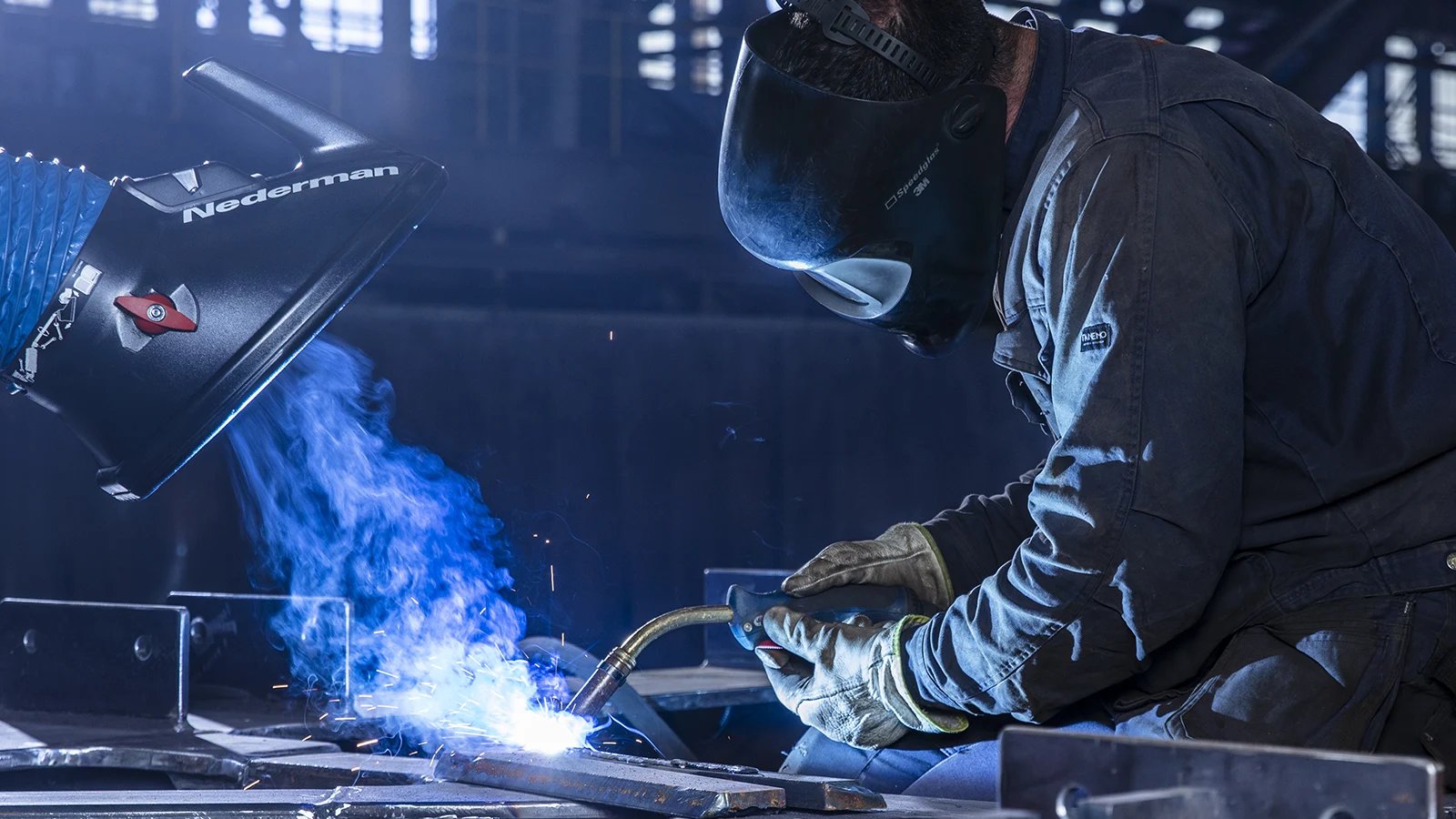
When is an integrated extraction system in a welding torch the best choice for weld fume extraction?
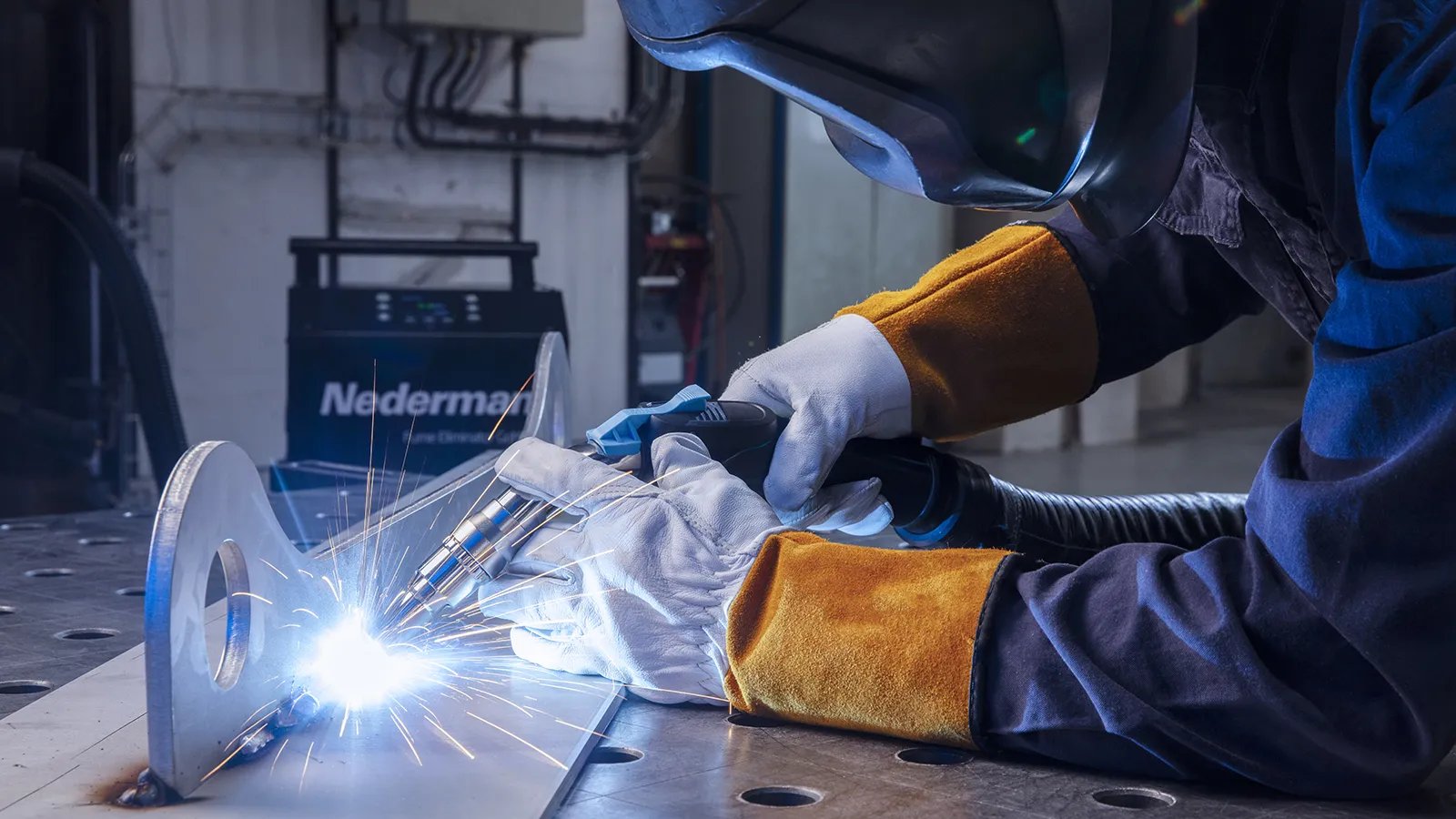
Every welding process requires the right approach to fume extraction to ensure both efficiency and safety. This article explains when an integrated extraction system in a welding torch, also known as on-torch extraction, is the most effective solution for capturing fumes directly at the source.
When welding over large surface areas, where the operator needs to move along the workpiece or work in confined spaces, fixed extraction systems can be difficult to use. In these situations, an integrated extraction system in a welding torch is often the best choice, enabling on-torch extraction directly at the source.
As the extraction system is built into the welding torch, it moves with the operator and captures fumes close to the arc, even when the working position changes, ensuring consistent at-source capture throughout the whole welding process.
How does an integrated extraction system in a welding torch work in practice?
An integrated extraction system in a welding torch extracts fumes directly via the torch at the welding zone, ensuring that extraction takes place close to the source without the operator having to adjust any separate equipment.
Instead of manually moving an extraction hood, the extraction follows automatically, which improves workflow efficiency and reduces interruptions during welding.
When is an integrated extraction system in a welding torch the best choice?
Integrated extraction in a welding torch is best suited when fumes need to be captured directly at the source without the operator having to adjust separate equipment whilst working.
It is also a solution used when the workspace is limited or when other installations make it difficult to work with extraction arms from above. In these scenarios, on-torch extraction offers greater flexibility and ease of use. However, in most cases, it needs to be used as a complementary solution within a wider welding fume extraction system to also capture fumes that may spread into the surrounding workspace.
What factors affect the performance of on-torch extraction?
Although fumes are captured at source, overall performance of on-torch extraction is still highly dependent on how the welding is carried out in practice. The pace of work, welding direction, and the positioning of the welding torch in relation to the fumes all influence extraction efficiency. In addition, the airflow within the workspace can have a significant impact. If fumes are displaced away from the point of extraction, the efficiency is reduced, even if the extraction system is positioned close to the arc.
Consequently, integrated extraction performs best in controlled environments where the welding process is steady and where airflow in the workshop does not disturb or disperse the fumes.
When does an integrated extraction system in a welding torch need to be complemented?
In addition to how welding is carried out in practice, there are other situations where on-torch welding fume extraction is not sufficient on its own. In high-volume production, when several welders are working simultaneously, or in larger premises, some fumes may still spread into the surrounding area.
In such cases, complementary solutions are often used, such as local exhaust ventilation, for example with mobile units, or ambient air filtration solutions, to handle fumes that are not captured at source.
An integrated extraction system in a welding torch as part of a complete solution
At Nederman, we work with complete system solutions where integrated extraction forms part of a wider solution. This makes it possible to optimise both at-source capture and overall ambient air quality, based on how welding is actually carried out.
Take the next step and find the right approach for your welding application
An integrated extraction system in a welding torch is an effective way to capture welding fumes close to the source, particularly during mobile or dynamic work tasks where on-torch extraction supports flexibility.
Contact our clean air experts to find the right set-up tailored to how welding is performed in your production.