- Home
- Applications
Welding Fume Extraction

Fume extraction in welding applications
Ensuring proper fume extraction in welding applications is crucial for preventing serious health risks among welders, enhancing productivity, and maintaining compliance with safety standards.
Welding processes, including MIG, TIG, stick, FCAW, and laser welding, generate hazardous fumes classified as Group 1 carcinogens by the International Agency for Research on Cancer (IARC). Effective fume control is essential to protect worker health, maintain productivity, and meet regulatory requirements.
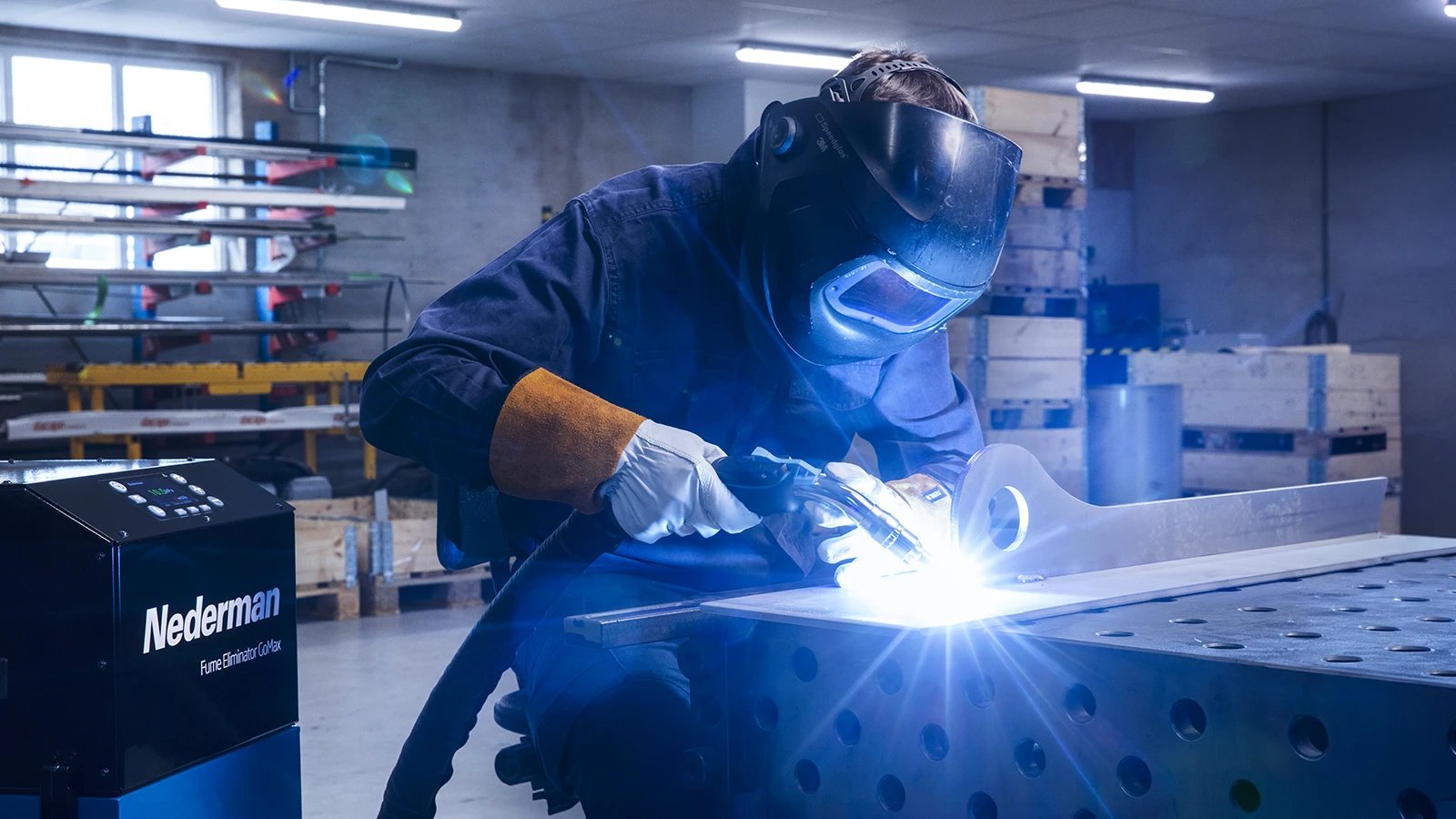
Nederman delivers a complete approach to weld fume control — combining capture, high-efficiency filtration, intelligent monitoring, and regulatory expertise to create welding environments that are safe, productive, and energy efficient. Our solutions help manufacturers maintain air quality, support compliance, and protect both people and operations.
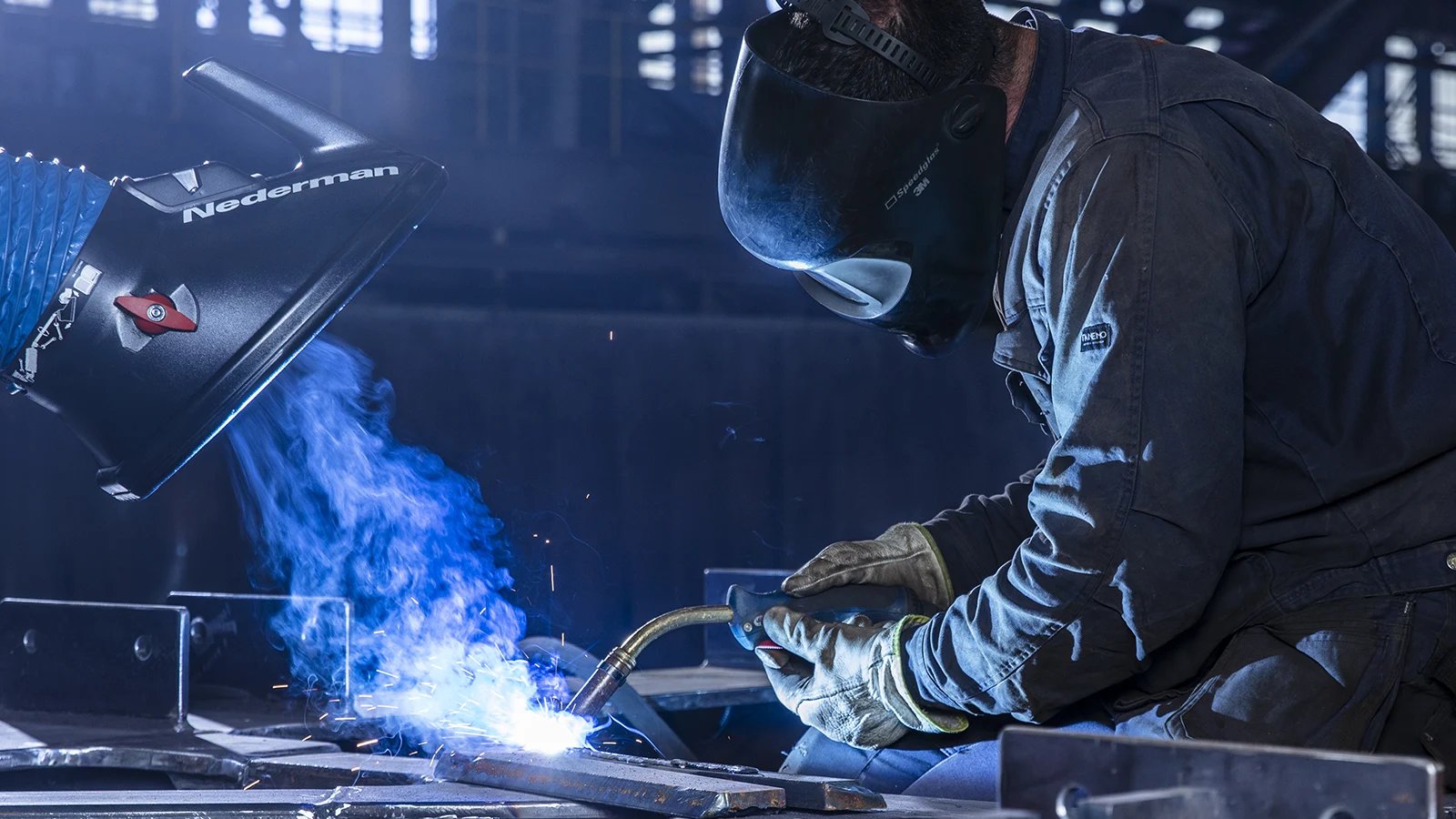
Filtration solutions for welding fume
Capturing weld fumes is only the first step. The next is ensuring hazardous particles are effectively removed before air is recirculated or exhausted.
Whether your operation involves light fabrication or high-volume automated production, our filtration systems are engineered to handle the fine, complex particulate generated during welding. From mobile units for individual workstations to centralized systems serving entire facilities, our technologies deliver clean air, dependable performance, and long-term efficiency.
Filter technology
Weld fume particles are extremely small, with nearly all measuring less than 1 µm, requiring filtration capable of capturing submicron particulate. Filter media rated ISO ePM1 and MERV 13 or higher are critical for effective removal.
For highly toxic materials such as stainless steel welding, safety after-filters including HEPA filtration may be required, particularly when air is recirculated into the workspace.
Advanced surface-loading media such as nanofiber or ePTFE membranes keep particulate on the filter surface, improving cleaning efficiency, extending filter life, reducing pressure drop, and lowering energy consumption.

Compliance with welding fume regulations and occupational exposure limits
Weld fume control systems are essential for meeting occupational health and environmental regulations worldwide. Authorities such as OSHA, the UK’s HSE, EU directives, and ACGIH establish exposure limits for hazardous airborne contaminants.
Exposure limits vary by substance but are typically very low. For example, total welding fume limits are often around 1–5 mg/m³ (8-hour TWA), while specific toxic components such as manganese may be limited to approximately 0.02–0.2 mg/m³, and hexavalent chromium (Cr VI) as low as 0.005 mg/m³ (5 µg/m³).
Because requirements differ by region and application, facilities should consult applicable to local regulations when designing fume control systems. Nederman solutions help manufacturers maintain compliance by controlling exposure, maintaining safe air quality, and documenting system performance.
Complete clean air solutions for welding operations
By integrating capture, filtration, monitoring, and compliance expertise, Nederman delivers a complete clean air solution for welding operations of any size - from manual fabrication shops to fully automated production facilities.
Nederman can assess your welding operations and recommend a tailored solution - whether source capture, containment, ambient filtration, or a combination approach.
Contact a Nederman Clean Air Specialist to discuss your requirements and discover how our solutions can optimise your welding environment.

Download our Welding Fume Extraction Brochure
Download
Loading...